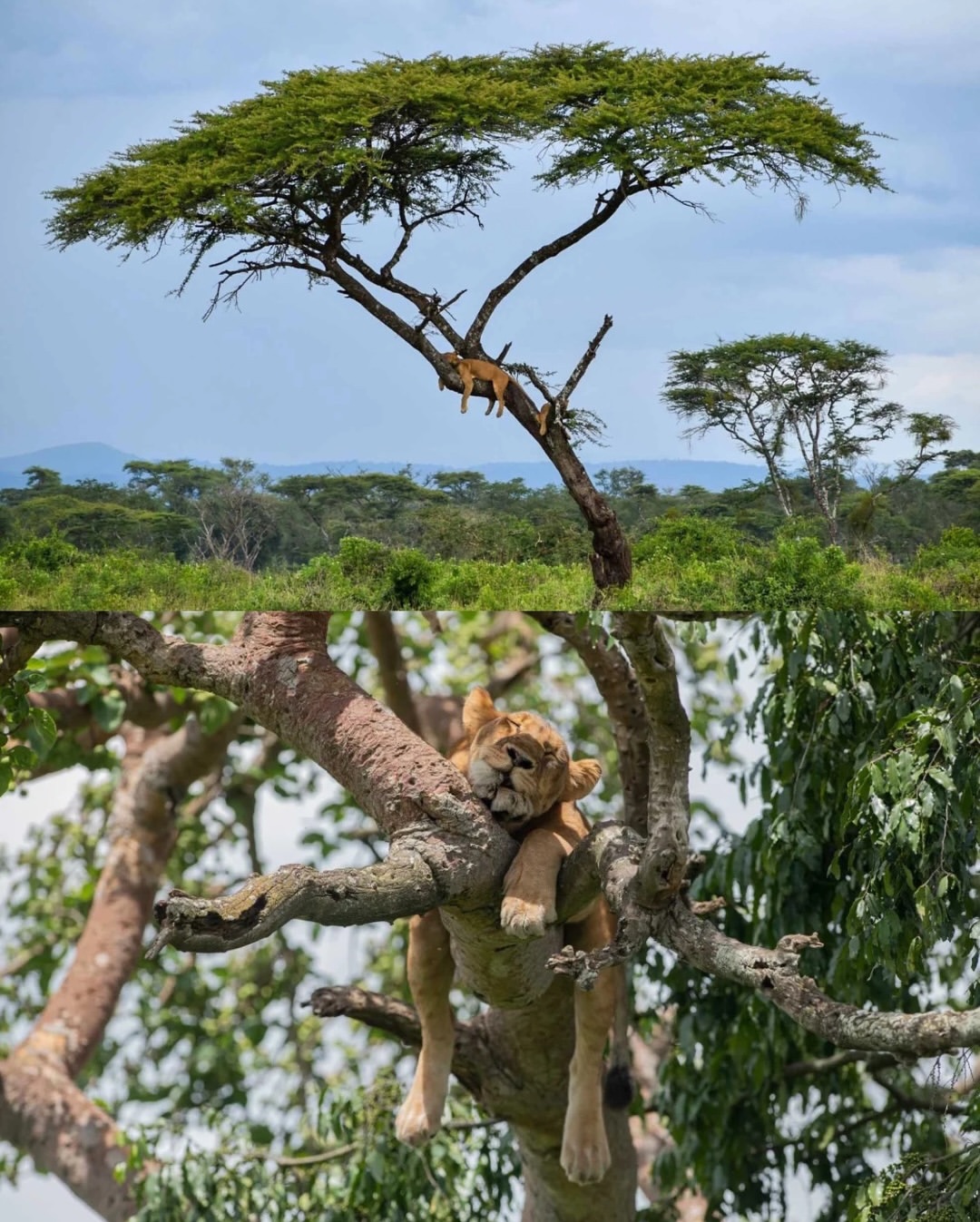
The High-Flying Queens of Ishasha: Why These Wild Cats Love to Lounge Up High
When you think of a 400-pound lion, you usually picture them strutting across the open savanna or lazing under the shade of a bush. But if you travel to the Ishasha sector of Queen Elizabeth National Park in Uganda, you’ll need to tilt your chin up. Dangling elegantly from the sturdy branches of massive sycamore fig and acacia trees, you will find entire prides of lions looking less like fierce savanna executioners and more like oversized, glamorous housecats
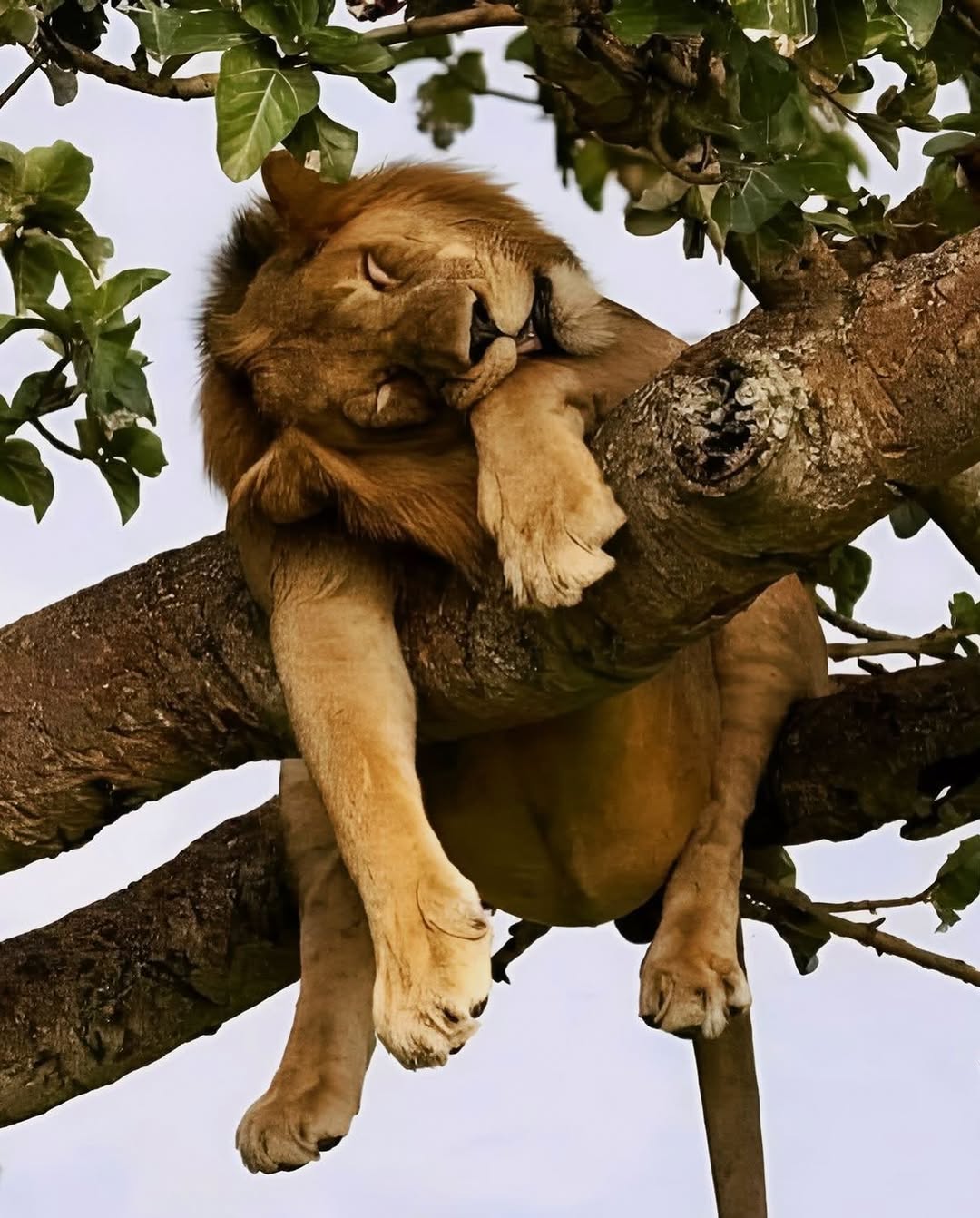 .
.
They are one of only two populations on the entire planet that regularly climb trees as a daily habit. They aren’t genetically different from other lions—they’ve just mastered a brilliant, high-altitude lifestyle trend.
The Ultimate Insect Repellent
The ground in Ishasha can get pretty intense, especially when tsetse flies and mosquitoes are breeding. These buzzing pests swarm the grass, biting the lions mercilessly. By scaling the broad branches of the local fig trees, the lions rise above the fly zone. The higher elevation catches the cool breezes, effectively creating an all-natural, bug-free VIP lounge.

Escaping the Heat with Serious Style
The tropical sun gets scorching between 11:00 AM and 3:00 PM. While the savanna floor bakes, the thick canopy of a fig tree acts like a natural air conditioner. The lions stretch out over limbs to maximize air circulation around their bodies, lazily digesting their morning meals in total comfort.
The Best Seat in the House
Aside from avoiding bugs and heat, being up in the canopy serves a major tactical purpose. From their elevated perches, these big cats get an unobstructed, 360-degree view of their territory. They can easily scan the tall grasses for moving herds of Uganda kob and antelopes, turning their relaxing rest stops into strategic scouting centers for their next hunt.
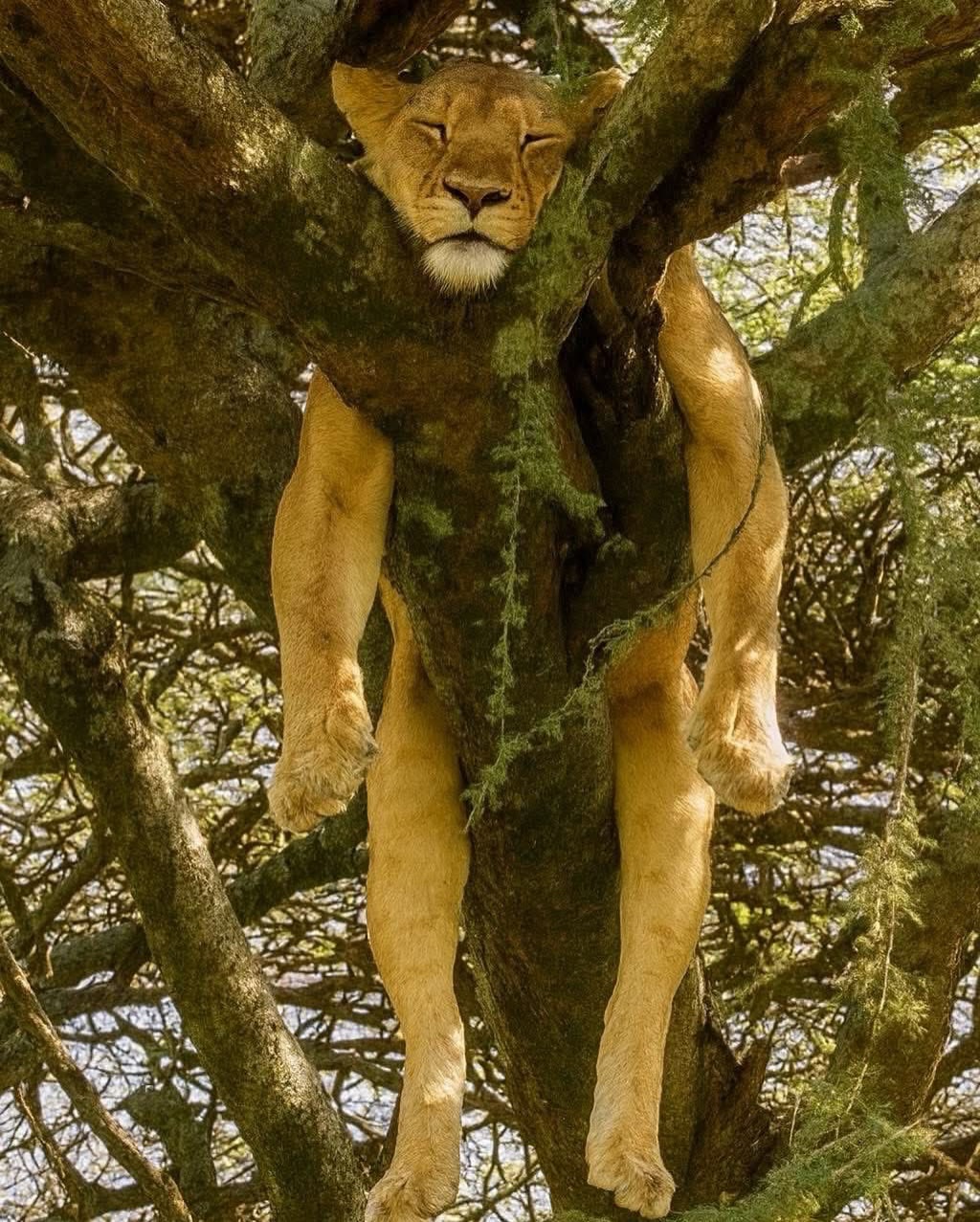
A Family Tradition: This isn’t just an instinct; it’s a culture. Lionesses in Ishasha actively teach their cubs how to climb and balance on branches from a young age, passing the glamorous high-rise lifestyle down through generations.
Helping Our Wild Cousins
While these gorgeous cats look perfectly at ease, their numbers are dangerously low, with only around 40 to 50 individuals left in the Ishasha prides. They face severe threats from human-wildlife conflict and habitat loss. Supporting eco-tourism and local conservation initiatives helps ensure that these tree-dwelling monarchs keep their magnificent penthouses for generations to come.