

Rosette Royalty: Inside the Secret World of the Leopard
Green eyes, gravity-defying naps, and a spot pattern more exclusive than a couture runway — meet the most underrated big cat on Earth, and the reason its crown is starting to wobble.
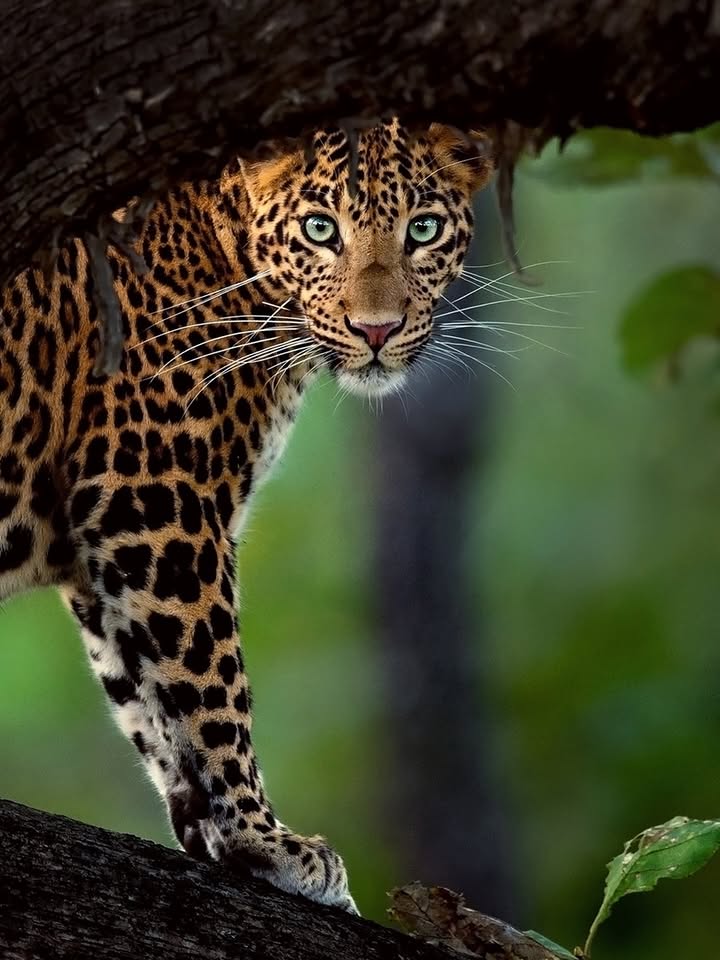
There is a particular kind of confidence that only comes from being the most successful cat on the planet and somehow never getting any credit for it. Enter the leopard: solitary, spotted, criminally photogenic, and about to become the main character of your afternoon. While lions get the documentaries and tigers get the tattoos, the leopard has quietly out-adapted, out-lasted, and out-charmed every other big cat alive — all while perfecting the art of looking like it simply cannot be bothered.
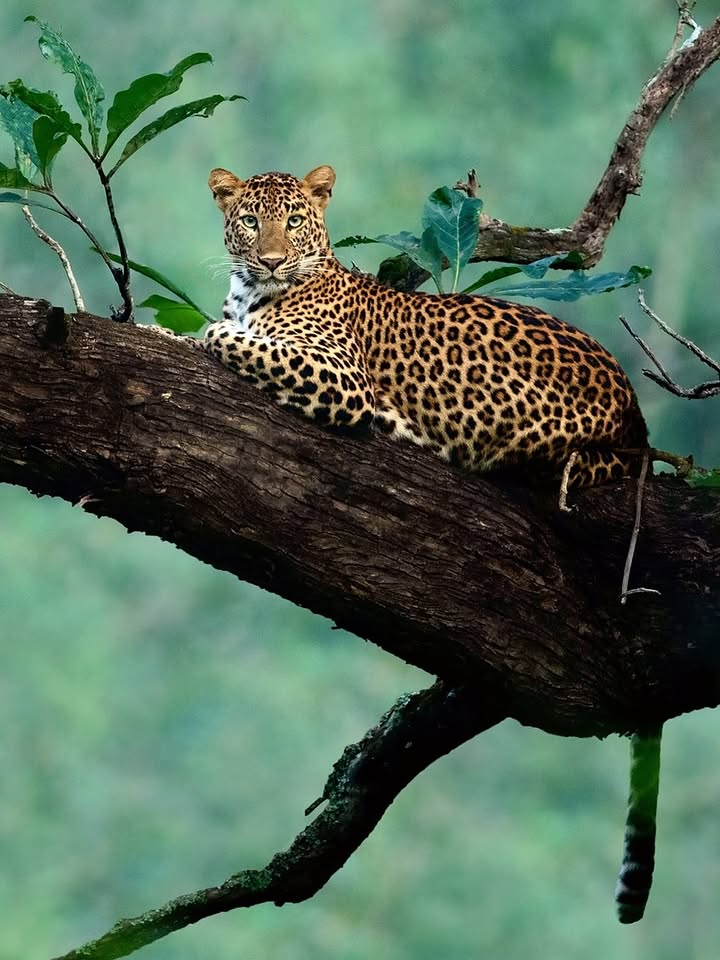
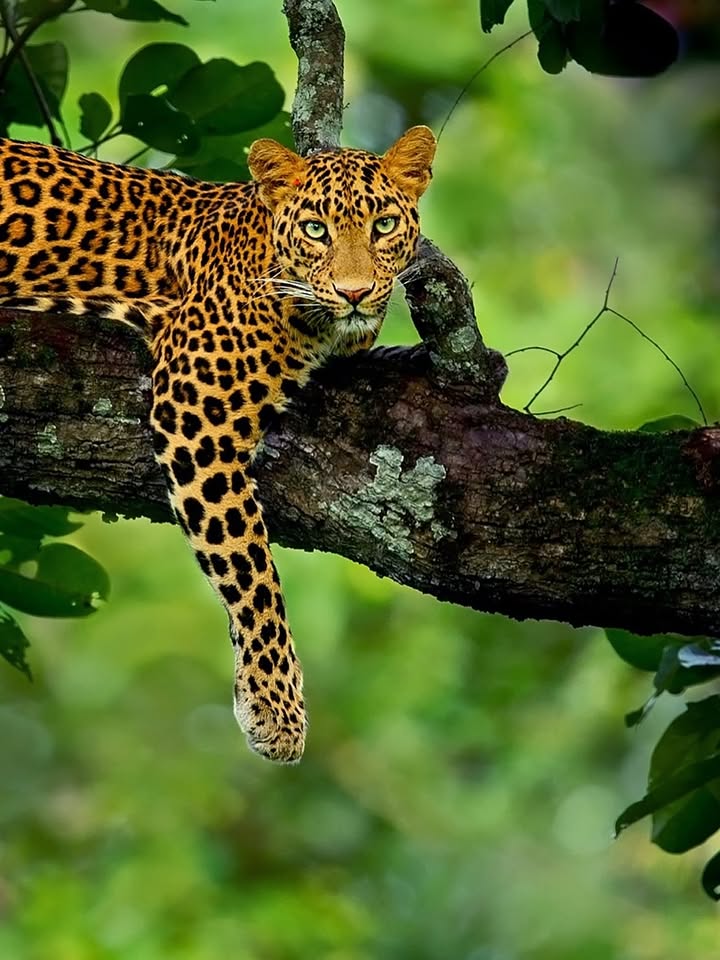
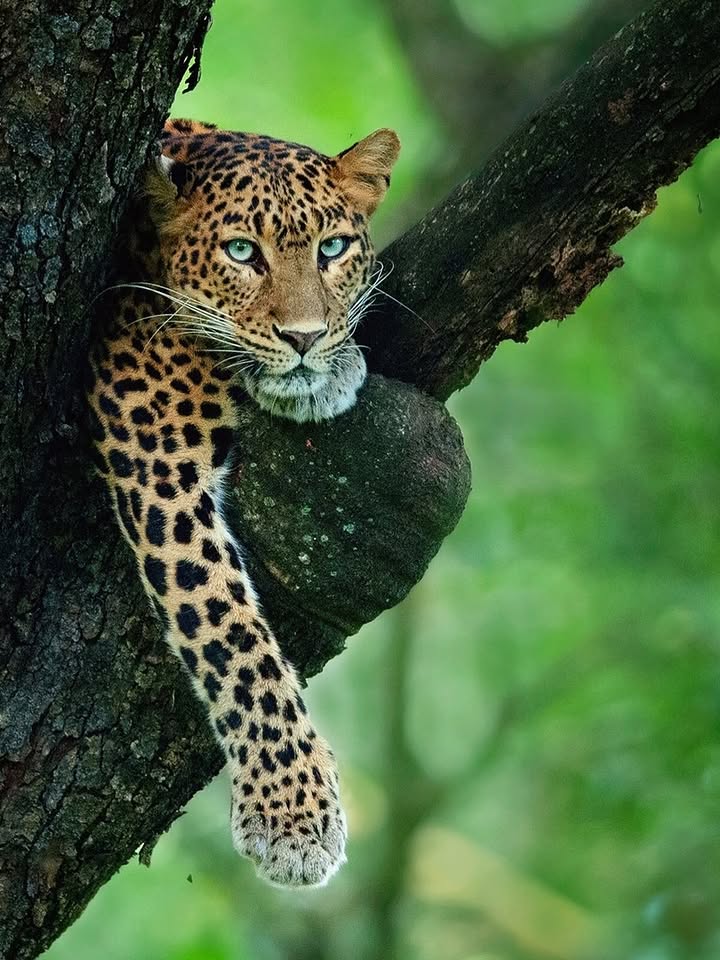
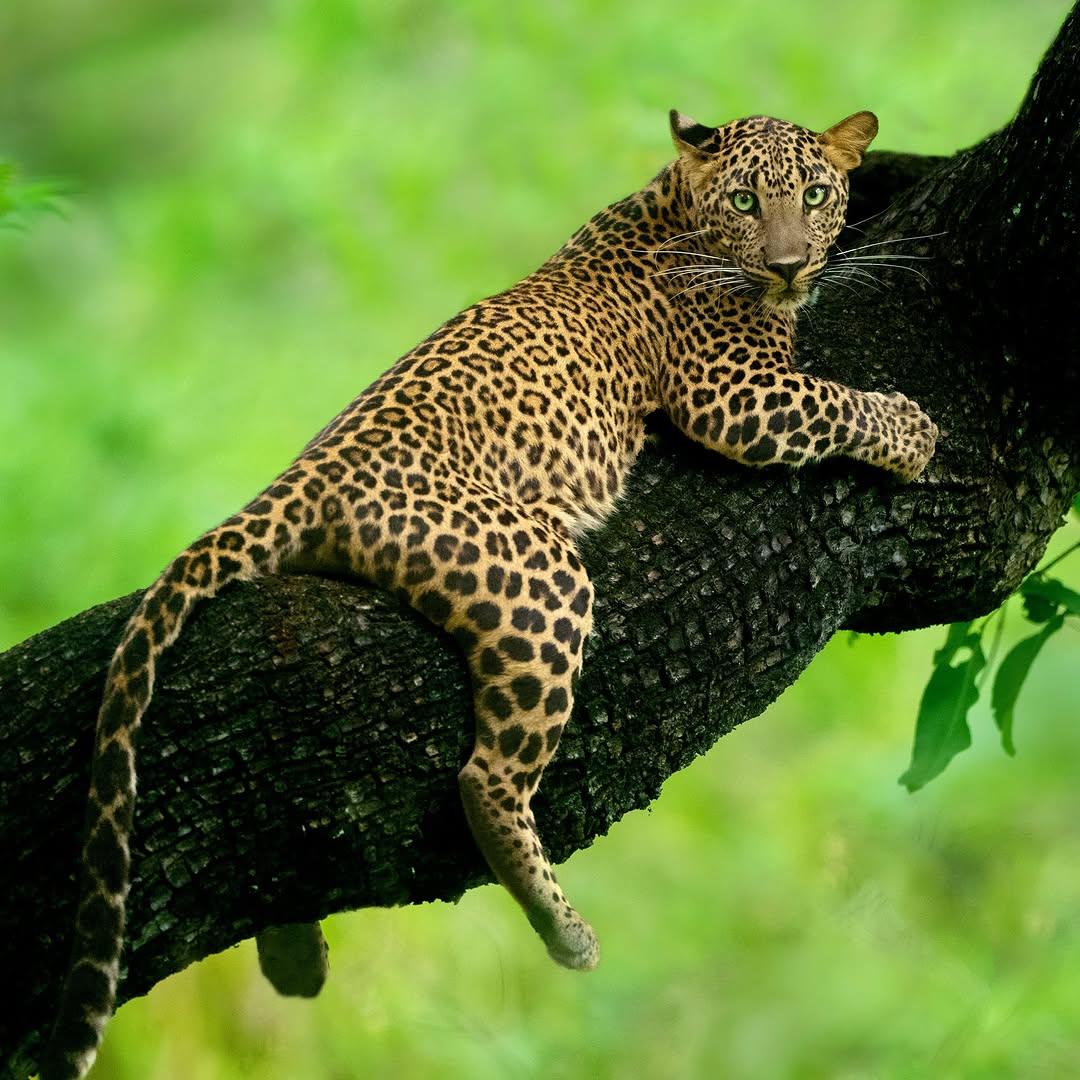
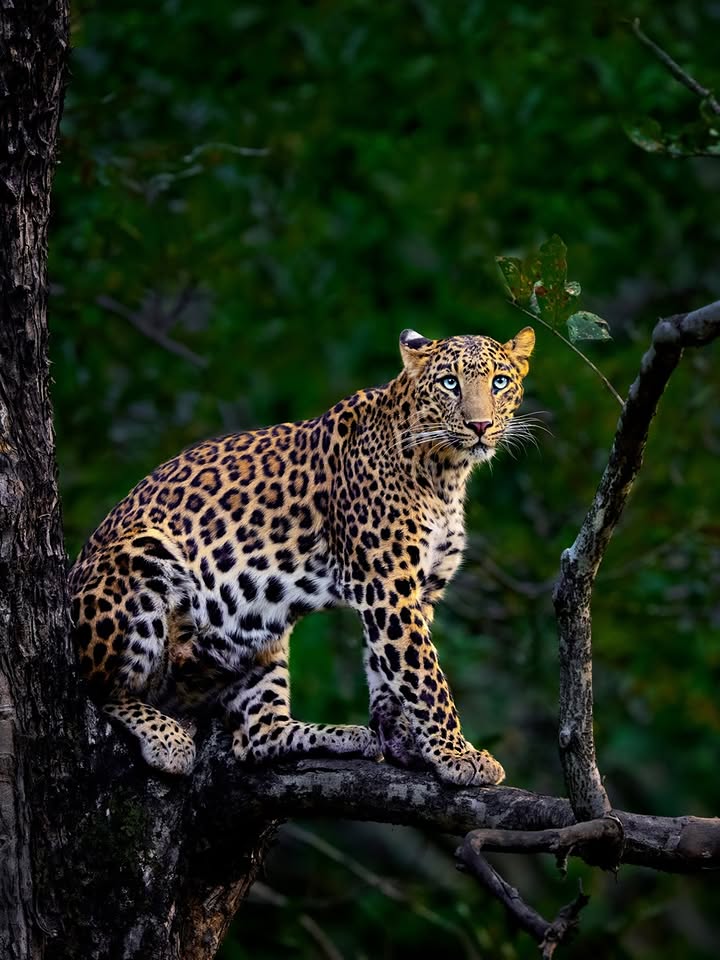
These particular specimens, draped over branches like they’re auditioning for a fainting-couch advertisement, are almost certainly Indian leopards — Panthera pardus fusca — photographed in the kind of dense, dripping deciduous forest that makes South and Central India famous among wildlife photographers. The pale green eyes, the ochre-and-black rosettes, the total commitment to horizontal living: this is a leopard in its element, and its element is “yours, actually, all of it.”
The Original Influencer
Long before anyone coined the term “effortless glow-up,” the leopard had already perfected it. Every rosette pattern is unique to the individual, functioning like a fingerprint stitched into fur — no two leopards, anywhere on the planet, wear the same coat twice. That tail dangling off the branch isn’t just for drama; at nearly the length of the leopard’s own body, it acts as a counterbalance, letting the cat treat a tree limb the way the rest of us treat a couch.
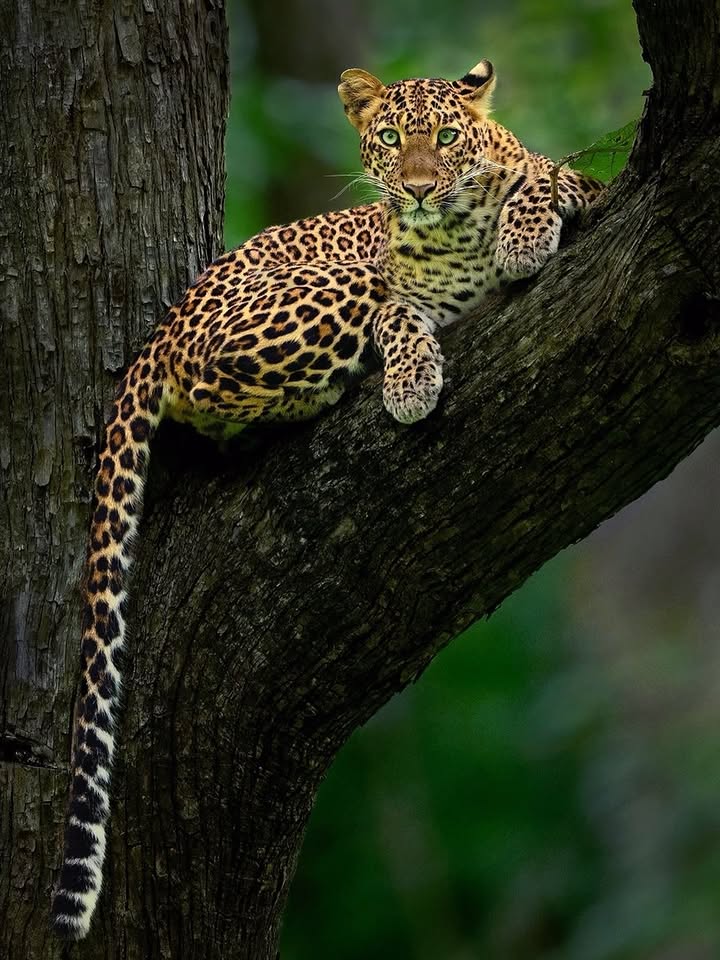
Pound for pound, the leopard is the strongest of the big cats. It can haul a kill more than twice its own body weight straight up a tree trunk, a feat that keeps dinner safely out of reach of hyenas, lions, and other cats with worse manners. It’s also a capable swimmer, a startlingly fast sprinter over short distances, and mostly nocturnal or crepuscular, which is a fancy way of saying it prefers to run the neighborhood on its own schedule, thank you very much.
Not All Spots Are Created Equal
Here’s the twist nobody tells you at the safari lodge: “leopard” is not one uniform animal but a single species, Panthera pardus, splintered into roughly nine recognized subspecies scattered across Africa and Asia. The Indian leopard featured here is the second-largest population outside Africa, adapted to everything from scrubland to rainforest to the literal edges of major cities. Compare that to its cousins — the Amur leopard of the Russian-Chinese border, built for snow; the Arabian leopard, built for desert cliffs; the Sri Lankan leopard, an island specialist with no other big cat to compete with — and you start to see just how wildly the same basic blueprint can be reused.
The Elephant in the Room (Sized Cat)
Now for the part of the article where the champagne goes a little flat. Globally, the leopard is currently listed as a species of concern, and a recent reassessment of the Indian leopard specifically suggests the population has dropped by close to a quarter over the last three generations, driven by habitat loss, fragmentation, and escalating conflict with people1. That number sounds bad on its own. It sounds worse once you learn it’s the recent chapter of a much longer story.
A genetic study tracing leopard DNA across four major Indian subpopulations found evidence of a staggering 75 to 90 percent decline over the past 120 to 200 years, likely driven by the same sweeping land-use changes — agricultural expansion, habitat conversion — that reshaped the subcontinent during that period2. In other words, the leopard you’re looking at right now is the descendant of a population that has already lost most of its members, and is still losing ground.
By the Numbers
- Indian leopard (P. p. fusca): Near Threatened; population estimated to have fallen roughly 24.5% over three generations1
- Amur leopard (P. p. orientalis): Critically Endangered; recent camera-trap survey estimates put the entire wild population at around 84 individuals total, across the Russia-China border3
- Sri Lankan & Persian leopards: Endangered
- Arabian leopard: Critically Endangered, with extinction already confirmed across parts of its historic range
Why the Spots Are Fading
The leopard’s biggest survival skill — adaptability — has become something of a double-edged claw. Because it can live almost anywhere, it increasingly lives right at the edge of human settlements, which means more encounters with livestock, more retaliatory killings after a goat goes missing, and more roadkill. Add in poaching for skins and bones (leopard parts are sometimes trafficked as a substitute for tiger parts in illegal wildlife markets), shrinking forest corridors carved up by roads and farmland, and a shrinking prey base, and you get a species that looks common on a wildlife photographer’s memory card but is quietly running out of room everywhere else.
The Comeback Season
It isn’t all bad news. Camera-trap technology has made leopard population counts far more accurate than the old track-in-the-snow guesswork, letting conservationists actually see where corridors are working and where they’re not. Community-based coexistence programs — compensating farmers for livestock losses, building predator-proof enclosures, training local guides to turn leopards into tourism income instead of a threat to be eliminated — have shown real results in parts of both Russia and India. The leopard has clawed its way back from worse odds before. It just needs the room to keep doing it.
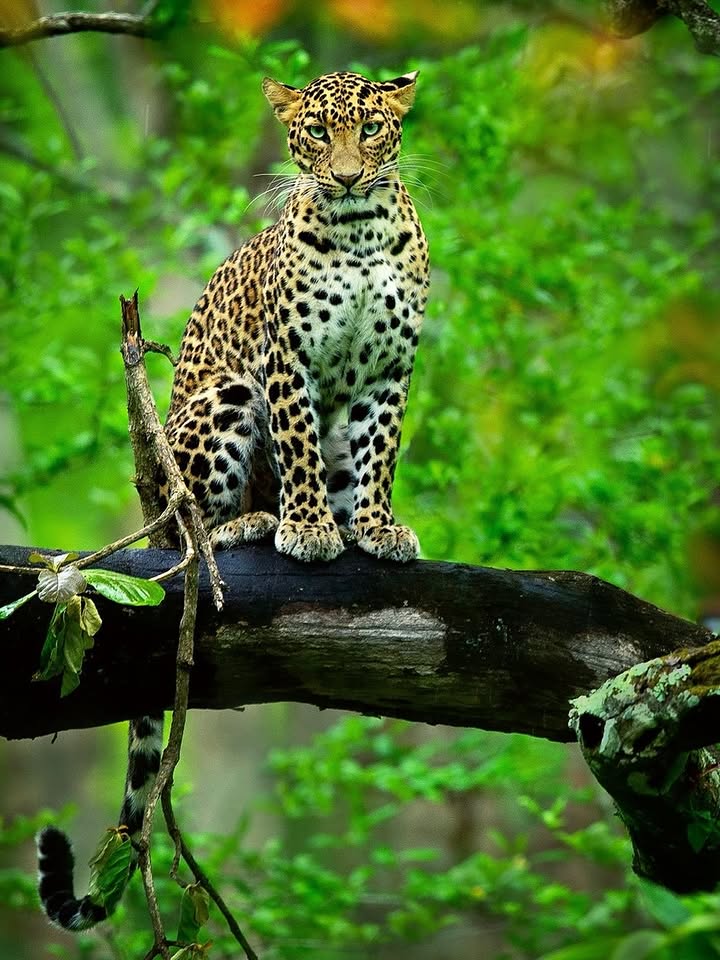
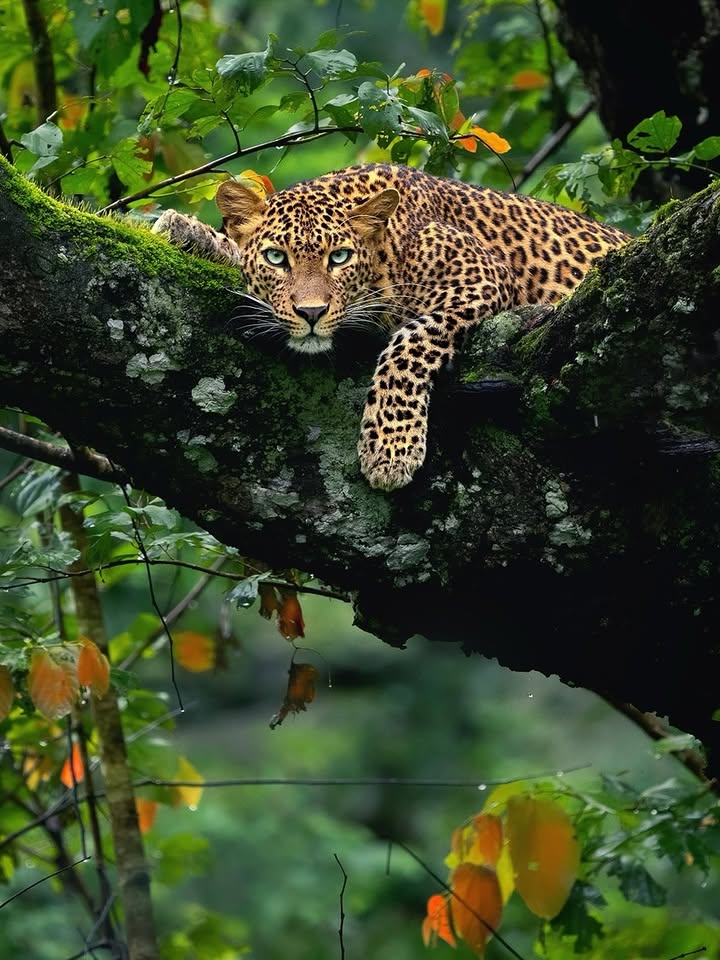
So the next time someone tells you leopards are “basically fine, there are loads of them,” feel free to purr politely and then correct them. There are loads of them in photographs. There are considerably fewer of them in the wild than there used to be, and the trend line is still pointing the wrong direction. The least we can do is stop mistaking a good camera angle for a healthy population.
A Note from The Cat House Foundation
Every feature on the Nature & Conservation desk closes the same way it opens: with a reminder that beauty and vulnerability aren’t opposites. A portion of Cat House proceeds goes toward habitat and welfare initiatives for wild and domestic cats alike, because a spot pattern this stunning deserves a forest to wear it in.
Endnotes
- Down To Earth, “Indian leopard suspected to have decreased by 24.5% over last 3 generations: IUCN,” 2024. downtoearth.org.in
- Mongabay-India, “Leopard genes hint at a probable population decline in India a century or two ago,” 2020. india.mongabay.com
- Morung Express, “‘Only 84 Amur leopard remain in the wild,'” citing Xinhua News Agency. morungexpress.com


